Myalgic Encephalomyelitis / Chronic Fatigue Syndrome
  • Home
  • 🇬🇧 Blog (EN)
  • 🇫🇷 Blog (FR)
  • 🇩🇪 Blog (DE)
  • FAQ
  • About
  • Download PDF
    • 🇬🇧 RSS (EN)
    • 🇫🇷 RSS (FR)
    • 🇩🇪 RSS (DE)
Categories
All (97)
ADHD (4)
Antivirals (1)
Autoimmunity (2)
Autonomic (1)
Autonomic Dysfunction (4)
Biochemistry (1)
Biomarkers (2)
Cardiovascular (1)
Causal Hierarchy (4)
Chronic Infection (2)
Comorbidities (7)
Connective Tissue (2)
Cross-Disease (1)
Diagnosis (1)
Diagnostics (8)
Dysautonomia (2)
EBV (1)
Endocrine (1)
Energy Metabolism (10)
Epidemiology (5)
Epigenetics (1)
Evolutionary Biology (1)
Fibromyalgia (2)
Gastrointestinal (1)
Genetics (5)
GI Dysmotility (2)
Glymphatic System (2)
GPCR (1)
Gut (2)
Gut Microbiome (2)
hEDS (3)
HHV-6 (1)
History (1)
Hypermobility (5)
Immunoadsorption (1)
Immunology (6)
Ion Channels (1)
IVIG (1)
MCAS (3)
ME/CFS (23)
Medical Education (2)
Migraine (1)
Misdiagnosis (7)
Mitochondria (3)
Modeling (3)
Neurocognitive (1)
Neurodivergence (16)
Neurology (7)
Neuropathy (2)
Pain (6)
Pathophysiology (39)
Pediatrics (2)
PEM (4)
Pharmacology (8)
Policy (1)
POTS (2)
Public Health (2)
Quality of Life (1)
Research (3)
Septad (1)
Series (3)
SFN (2)
SIBO (2)
Sleep (10)
Social Impact (1)
Symptoms (10)
Synthesis (1)
Systems Biology (7)
Systems Medicine (2)
Treatment (30)
Treatment Failure (1)
Update (1)

Blog

Also available in: English · Français · Deutsch


Acquired vs. Developmental: When ADHD-Like Features Might Be Reversible

Neurodivergence
Pathophysiology
Symptoms

Some ADHD-like features — inattention, impulsivity, executive difficulty — can arise after development rather than from it. This final part examines the evidence that adult ADHD is often not a straightforward continuation of childhood ADHD, and how to tell acquired features from developmental wiring.

2026-08-28
Yannick Loth
 

The Dopamine-Nrf2-NLRP3 Axis: An Inflammatory Loop Behind ADHD and Fatigue

Neurodivergence
Pathophysiology
Genetics

Low dopamine tone impairs the cell’s antioxidant-defense system, which removes a brake on the immune system’s central inflammatory switch — and the resulting inflammation further depletes dopamine, closing a self-amplifying loop. This cross-disease axis may explain why people with ADHD carry a lower threshold for post-infectious fatigue.

2026-08-27
Yannick Loth

A Single Dose Failure Is Not a Verdict — Why One Null Dose Does Not Rule Out the Others

Treatment
Pharmacology
ME/CFS

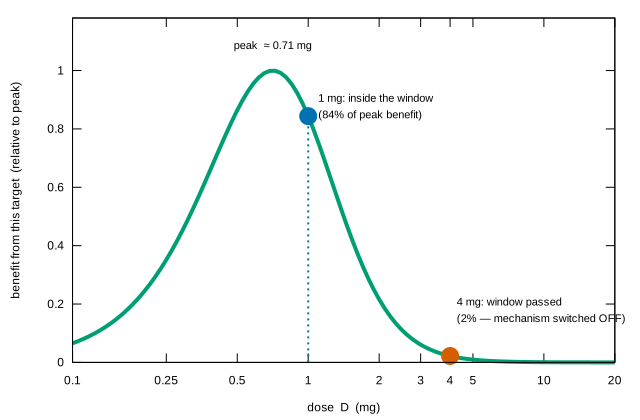
“If 4 mg of LDN doesn’t work, 1 mg won’t either.” This inference rests on an unstated assumption: that a higher dose reproduces all the effects of lower doses. For a drug that hits multiple targets at different concentrations, that assumption is false — and it can wrongly rule out a therapeutic dose.

2026-08-26
Yannick Loth
 

The Immune and Neuroinflammatory Strand of ADHD: When Inflammation Shapes Attention

Neurodivergence
Immunology
Pathophysiology

Not all ADHD may have the same cause. A growing line of evidence links ADHD-like features to chronic neuroinflammation and microglial activation — an immune-driven process that can deplete dopamine and degrade the same prefrontal circuits that primary ADHD affects through development. This article examines the evidence and what remains unproven.

2026-08-26
Yannick Loth
 

ADHD as a Prefrontal Energy Disorder: Five Lines of Evidence, One Mechanism

Neurodivergence
Energy Metabolism
Treatment
Pathophysiology

The prefrontal cortex is the most energy-expensive region in the human brain, so it is the first to degrade under any energy scarcity. This article brings together five independent lines of evidence — blood-flow failure, glucose hypometabolism, creatine depletion, catecholamine deficit, and an epidemiological gradient — and the multi-pathway treatment hypothesis: can treating several mechanisms at once give a more normal life?

2026-08-25
Yannick Loth
 

The Biology of ADHD — a Series

Neurodivergence
Series
Pathophysiology

ADHD is not one thing. Four independent strands of biology — prefrontal energy, immune-driven neuroinflammation, a dopamine-Nrf2-NLRP3 axis, and acquired trajectories — can each contribute to the symptom burden, and the way forward may be treating several of them at once. This is the landing page for a series that examines each strand and the multi-pathway treatment hypothesis.

2026-08-24
Yannick Loth
 

Acquired vs. Developmental: When Autism-Like Features Might Be Reversible

Neurodivergence
Pathophysiology
Symptoms

Some autism-like features — sensory rigidity, withdrawal, apparent alexithymia — can arise after development rather than from it. This final part examines the evidence that some of these are acquired and potentially reversible, and how to tell them apart from developmental autism.

2026-08-23
Yannick Loth
 

The Cerebellar-Glutamate Connection in Autism: A Wiring-Level Hypothesis

Neurodivergence
Pathophysiology
Genetics

A third line of research links autism to the cerebellum and to glutamatergic circuits — the brain’s excitatory wiring. This article examines the Purkinje-cell evidence, the genetic signal, and the testable prediction about sensory sensitivity.

2026-08-22
Yannick Loth
 

The Immune-Mediated Subset of Autism: When the Immune System Shapes the Brain

Neurodivergence
Immunology
Pathophysiology

A distinct line of research suggests a subset of autism may be immune-mediated — driven by maternal antibodies during development or by infection-triggered anti-neuronal responses. This article examines the evidence, the treatment implication, and what remains unproven.

2026-08-21
Yannick Loth
 

Autism as a Brain Energy Disorder: What the Science Says

Neurodivergence
Energy Metabolism
Treatment
Pathophysiology

A growing line of research treats some core autism symptoms — sensory overload, cognitive rigidity, social fatigue — as the brain’s response to an energy shortfall. This article explains the evidence, the modifiable targets, and the multi-pathway treatment hypothesis: can treating several mechanisms at once give a more normal life?

2026-08-20
Yannick Loth
 

Gastroparesis in ME/CFS: A Real, Measurable Slow Stomach — and a Safe Way to Manage It

Autonomic
Gastrointestinal
Symptoms

Delayed gastric emptying is a real, testable feature of ME/CFS, not a vague complaint. This article covers the evidence, the honest limits, the open mechanism question, the anxiety of living with a stomach you cannot trust, and a safe, ordered treatment pathway.

2026-08-20
Yannick Loth
 

The Biology of Autism — a Series

Neurodivergence
Series
Pathophysiology

Autism is not one thing. Four independent strands of biology — energy, immune, wiring, and acquired features — can each contribute to the symptom burden, and the way forward may be treating several of them at once. This is the landing page for a series that examines each strand and the multi-pathway treatment hypothesis.

2026-08-19
Yannick Loth
 

Chained Together: How the Amplifiers Become One Disease in ME/CFS

ME/CFS
Synthesis
Comorbidities
Septad
Pathophysiology

The synthesis capstone of the co-occurring conditions series — how mast-cell activation, POTS, hypermobility, small fiber neuropathy, chronic infection, GI dysmotility, autoimmunity, and fibromyalgia-pain do not simply co-occur but amplify one another through feedback loops that turn separate diagnoses into one machine. The Septad as interacting amplifiers, the amplification ratchet, and the clinical imperative of multi-target treatment.

2026-08-16
Yannick Loth
 

Autoimmunity Article 2: Immunoadsorption, IVIG, Rituximab, Daratumumab — Removing the Antibodies, and What It Means When That Doesn’t Fix ME/CFS

Treatment
Autoimmunity
IVIG
Immunoadsorption
ME/CFS

A plain-language guide to autoimmune-targeted treatments in ME/CFS — immunoadsorption for GPCR autoantibody removal, IVIG for immunomodulation, rituximab and the lesson of the phase III null, daratumumab for plasma-cell depletion, why the controlled trials don’t match the open-label signals, expected results, and the honest ‘what if nothing helps’ discussion.

2026-08-15
Yannick Loth
 

Autoimmunity Article 1: GPCR Autoantibodies, Immune Attack on the Nervous System, and the Antibodies That Talk to Your Receptors in ME/CFS

Autoimmunity
GPCR
ME/CFS
Pathophysiology

A plain-language guide to autoimmunity in ME/CFS — why antibodies targeting your own receptors (β2-adrenergic, muscarinic M3/M4) may drive dysautonomia, the wildly assay-dependent reported prevalence that signals a measurement problem, why antibody titre does not equal disease severity, the Fc-glycoprofile gate, the post-infectious trigger, and the difference between classical autoimmunity and autoimmunity on top of ME/CFS.

2026-08-14
Yannick Loth
 

Chronic Infection Article 2: Antivirals, Immunomodulators, and What It Means When They Don’t Work in ME/CFS

Treatment
Chronic Infection
Antivirals
ME/CFS

A plain-language guide to treating chronic viral infection in ME/CFS — valacyclovir for EBV, valganciclovir for HHV-6/CMV, cimetidine as an immunomodulator, mast-cell stabilisers to intercept the EBV→MMP-9 pathway, why abortive lytic replication makes antivirals less effective than expected, and the honest ‘what if nothing helps’ discussion.

2026-08-13
Yannick Loth
 

Chronic Infection Article 1: EBV, HHV-6, Tick-Borne Disease, and the Infection That Never Ended in ME/CFS

Chronic Infection
EBV
HHV-6
ME/CFS
Pathophysiology

A plain-language guide to chronic infection and viral reactivation in ME/CFS — why EBV, HHV-6, and tick-borne pathogens keep signalling to your immune system years after the acute illness, the EBV→mast cell→MMP-9 pathway, abortive lytic replication, poly-herpesvirus co-reactivation, and the difference between active infection on its own and chronic immune stimulation on top of ME/CFS.

2026-08-12
Yannick Loth
 

GI Dysmotility Article 2: Treating SIBO, Gastroparesis, and the Gut — Diet, Prokinetics, Antibiotics, DAO, and What It Means When Nothing Helps

Treatment
GI Dysmotility
SIBO
ME/CFS
Gut

A plain-language guide to treating GI dysmotility and SIBO in ME/CFS — meal spacing and low-histamine elimination as the first lever, SIBO antibiotics and herbal antimicrobials, elemental diet, prokinetics for MMC support, DAO for histamine intolerance, butyrate for the barrier, expected results, the honest ‘what if nothing helps’ discussion, and what you can actually do.

2026-08-11
Yannick Loth
 

GI Dysmotility Article 1: SIBO, Gastroparesis, Histamine, and the Gut That Misbehaves in ME/CFS

GI Dysmotility
SIBO
ME/CFS
Gut
Pathophysiology

A plain-language guide to GI dysmotility and SIBO in ME/CFS — why the stomach empties slowly, how bacteria steal your breakfast, the mast-cell-gut-motility connection, hydrogen sulfide as a mitochondrial toxin, the DAO-histamine connection, and the difference between gut problems on their own and gut problems on top of ME/CFS.

2026-08-10
Yannick Loth
 

Fibromyalgia Article 2: Treating Fibromyalgia-Pattern Pain in ME/CFS — LDN, SNRIs, COX-2 Inhibitors, PEA, and What It Means When the Pain Doesn’t Stop

Treatment
Fibromyalgia
Pain
ME/CFS

A plain-language guide to treating fibromyalgia-pattern pain in ME/CFS — low-dose naltrexone for microglial TLR4, SNRIs for descending inhibition, gabapentinoids for central amplification, COX-2 inhibitors for the PGE2/TRPV1 loop, PEA for multi-modal pain, NMDA antagonists for severe cases, expected results, and the honest ‘what if nothing helps’ discussion.

2026-08-09
Yannick Loth
 

Fibromyalgia Article 1: The Pain That Isn’t Muscle — Fibromyalgia-Pattern Pain in ME/CFS and Why Your Nervous System Turned the Gain Up

Fibromyalgia
Pain
ME/CFS
Pathophysiology

A plain-language guide to fibromyalgia-pattern pain and how it overlaps with ME/CFS — why pain arrives without tissue damage, how TRPV1 and TRPA1 channels are stuck open, the COX-2/PGE2 feed-forward loop that makes body heat feel like burning, the nociplastic-neuropathic hybrid, and the difference between fibromyalgia on its own and fibromyalgia-pain on top of ME/CFS.

2026-08-08
Yannick Loth
 

SFN Article 2: Treating Small Fiber Neuropathy in ME/CFS — Pain Medications, IVIG, Mast-Cell Stabilisers, and What It Means When the Pain Doesn’t Stop

Treatment
SFN
Neuropathy
ME/CFS
Pain

A plain-language guide to treating small fiber neuropathy in ME/CFS — the neuropathic-pain ladder from gabapentinoids and SNRIs to topical lidocaine and capsaicin, IVIG for autoimmune SFN, alpha-lipoic acid and metabolic support, mast-cell stabilisers that interrupt the tryptase→PAR2 loop, expected results, and the honest ‘what if nothing helps’ discussion.

2026-08-07
Yannick Loth
 

The Quiet, The Difficult, The Absent: What Socializing Costs in ME/CFS

Social Impact
Energy Metabolism
Neurocognitive

She’s the quiet one in the group. Sometimes she’s not just quiet — she’s sharp, critical, negative. People notice the silence first, the flatness second, and then the edge. They interpret the quiet as disengagement, the criticism as hostility, the withdrawal as rejection. They are wrong on all counts…

2026-08-07
Yannick Loth
 

SFN Article 1: Small Fiber Neuropathy — When the Wiring Itself Is Wrong in ME/CFS

SFN
ME/CFS
Neuropathy
Pathophysiology

A plain-language guide to small fiber neuropathy and how it overlaps with ME/CFS — why the nerves themselves are damaged yet over-react, how mast cells attack nerve endings through tryptase and PAR2, the visceral-vs-somatic distinction, the DRG autoimmune hypothesis, and the difference between SFN on its own and SFN on top of ME/CFS.

2026-08-06
Yannick Loth
 

Hypermobility Article 3: When the Treatment Doesn’t Help — What Failure Means for Hypermobility on Top of ME/CFS

Treatment
Hypermobility
hEDS
ME/CFS
Treatment Failure

The honest, uncomfortable discussion about hypermobility treatment failure in ME/CFS — why physiotherapy can’t fix everything, the deconditioning-PEM trap, the matrix-stiffness tipping point, the falsifiable predictions, and what you can actually do when the loose tissue is permanent.

2026-08-05
Yannick Loth
 

Hypermobility Article 2: Managing Hypermobility on Top of ME/CFS — Physiotherapy, Circadian Collagen Support, MMP Inhibitors, and Emerging Therapies

Treatment
Hypermobility
hEDS
ME/CFS
Connective Tissue

A plain-language guide to managing hypermobile EDS and joint hypermobility in ME/CFS — the isometric resistance protocols that work, circadian collagen cofactor timing (vitamin C, alpha-ketoglutarate), glycine and proline for synthesis, doxycycline for MMP-9 inhibition, emerging therapies (tVNS, HIF-1α inhibitors, TGF-β1 blockade), CCI surgery, expected results, and a worked structured-trial example.

2026-08-04
Yannick Loth
 

Hypermobility Article 1: Hypermobile EDS and the Connective-Tissue Connection to ME/CFS — Why Flexible Tissue Feeds the Cascade

Hypermobility
hEDS
ME/CFS
Pathophysiology
Connective Tissue

A plain-language guide to hypermobile Ehlers-Danlos syndrome and how it overlaps with ME/CFS — why flexible tissue does not hold together, the five mechanistic pathways linking loose connective tissue to systemic illness, how mast cells may actively degrade collagen (acquired hypermobility), the TNXB genetics, the neurodivergence axis, and the difference between being hypermobile on its own and being hypermobile on top of ME/CFS.

2026-08-03
Yannick Loth
 

POTS Article 2: Treatments for POTS and Dysautonomia in ME/CFS — Salt, Fludrocortisone, Midodrine, Ivabradine, and What It Means When They Don’t Work

Treatment
POTS
Dysautonomia
Pharmacology

A plain-language guide to the medications used for POTS and orthostatic intolerance in ME/CFS — the treatment ladder from salt and compression through fludrocortisone, midodrine, ivabradine, beta-blockers, and pyridostigmine, the drug you should probably not take (the SSRI pitfall), expected results, and the honest ‘what if the drugs don’t work’ discussion.

2026-08-02
Yannick Loth
 

POTS Article 1: POTS and the Heart That Races When You Stand — What It Means With ME/CFS

POTS
ME/CFS
Dysautonomia
Pathophysiology

A plain-language guide to postural orthostatic tachycardia syndrome and how it overlaps with ME/CFS — why standing up makes your heart sprint, why blood volume is low but the hormone that fixes it is paradoxically off, how mast cells and connective tissue feed the problem, and the difference between POTS on its own and POTS sitting on top of ME/CFS.

2026-08-01
Yannick Loth
 

MCAS Article 3: When the Antihistamine Doesn’t Work: What It Does and Doesn’t Tell You About MCAS and ME/CFS

Treatment
MCAS
ME/CFS
Misdiagnosis

The honest, uncomfortable question: you tried mast-cell treatment for your ME/CFS and it didn’t help. This article explains why normal blood tests don’t rule out a histamine problem, why one drug failing proves little, the difference between histamine intolerance and MCAS, the ‘amplification ratchet’ of long illness, and what to do next.

2026-07-31
Yannick Loth
 

MCAS Article 2: Antihistamines for ME/CFS and MCAS: H1 vs H2, and Why Your Doctor Raises the Dose

Treatment
MCAS
Pharmacology

A plain-language guide to the medications used for mast cell activation in ME/CFS — the real difference between H1 and H2 antihistamines, where histamine and its receptors live, the mast-cell stabilisers, which symptoms the drugs can touch and which they can’t, and why higher-than-normal doses are sometimes necessary.

2026-07-30
Yannick Loth
 

MCAS Article 1: MCAS and ME/CFS: Why Your Body Reacts to Nothing

MCAS
ME/CFS
Pathophysiology

A plain-language guide to mast cell activation syndrome and how it overlaps with ME/CFS — what MCAS is, why mast cells can fire with no allergen at all, why MCAS almost always arrives after ME/CFS (not before it), the allergy that spreads from one food to the world, and how to tell MCAS-by-itself apart from ME/CFS-with-MCAS.

2026-07-29
Yannick Loth
 

The Conditions That Travel With ME/CFS — a Series

ME/CFS
Series
Comorbidities

ME/CFS rarely travels alone. Mast cell activation, POTS, hypermobility, fibromyalgia, gut problems, and migraine all co-occur far more often than chance. This is the landing page for a plain-language series on each co-occurring condition: what it is, how it relates to ME/CFS, the treatments, and — always — what it means if the treatment doesn’t work.

2026-07-28
Yannick Loth
 

Part 1: Why More Isn’t Better — The Dose-Response Paradox in LDN and LDA

Treatment
Pharmacology
ME/CFS

You finally found a dose that works. Your doctor suggests doubling it — after all, if a little helps, more should help more. But for LDN and LDA, that logic is backwards. Here’s the mechanism that explains why raising the dose can make you worse.

2026-07-27
Yannick Loth
 

Part 2: The Inverted-U Is Not One Thing — Four Ways a Drug Can Stop Working When You Raise the Dose

Treatment
Pharmacology
Pathophysiology

Eighteen medications in ME/CFS show the same pattern: benefit at low dose, harm at high dose. The curve is the same. The mechanism is not. Here’s the molecular decomposition.

2026-07-27
Yannick Loth
 

Part 3: Your LDN Dose Is a Diagnostic — What the Dose-Response Curve Says About Which Mechanism Is Broken

Treatment
Pharmacology
ME/CFS

You don’t need a biomarker to know which LDN mechanism is dominant in your ME/CFS. The dose-response curve itself is the readout. Here’s how to read it.

2026-07-27
Yannick Loth
 

Part 4: The Pharmacopoeia — Every Dose Range for Every Medication, and What It Means

Treatment
Pharmacology
ME/CFS

You’ve tried a drug at one dose and it didn’t work. Or it worked, then stopped. Or it caused a side effect your doctor dismissed. Here’s how to read dose-response across eighteen medications — not just whether a drug ‘works,’ but what each dose range reveals about your underlying biology.

2026-07-27
Yannick Loth
 

Weekly Update — July 21–27, 2026: A Pharmacodiagnostic Compass, Six New Chapters, Companion Papers, and the Dose That Is a Diagnostic

Research
ME/CFS
Update

The paper grew by 102 drugs, 17-dose hormesis framework, 4 new chapters, 924 glossary entries, a 4-category inverted-U decomposition, and the first pharmacodiagnostic matrix linking every drug response to underlying mechanism — all in one week.

2026-07-27
Yannick Loth
 

749 Belgians With ME/CFS Told Their Government What’s Broken — The Data Is Brutal

Policy
Quality of Life
Diagnosis
Treatment
Comorbidities
Epidemiology

Belgium’s first comprehensive ME/CFS needs assessment. 749 patients surveyed, 19 interviews. Quality of life comparable to the most disabling conditions known, diagnostic delays past 5 years, GET harming most patients, and 8.6 years lost to workplace disability. What the report found, what it means for patients and doctors everywhere.

2026-07-21
Yannick Loth
 

Part 1: The Genetics Settled It — ME/CFS Is Neurological

Genetics
Neurology
Pathophysiology

For decades, the debate ran: is ME/CFS autoimmune or neurological? The largest GWAS to date answered it. The risk variants operate in neurons, not immune cells. Here’s what that changes.

2026-07-21
Yannick Loth
 

Part 2: The Striatum Is the Bottleneck

Genetics
Neurology
Systems Biology

If viruses, trauma, and immune activation all trigger the same disease, where do they converge? The DecodeME GWAS points to a single circuit. Target the bottleneck, not the trigger.

2026-07-21
Yannick Loth
 

Part 3: Parkinson’s Drugs for ME/CFS? The Genetics Say Yes

Treatment
Neurology
Pharmacology

Dopamine-modulating drugs aren’t symptom management anymore — the GWAS shows they’re targeting the genetically implicated circuit. From Ritalin to rotigotine, here’s what the rationale looks like now.

2026-07-21
Yannick Loth
 

Part 4: The Striatum Isn’t Ours — What Shared MSN Enrichment Means for ME/CFS

Genetics
Neurology
Cross-Disease

The DecodeME GWAS points to medium spiny neurons. So do the GWAS for schizophrenia, depression, and alcohol use disorder. Same cell type, different diseases. Here’s why that doesn’t weaken the finding — it sharpens the next question.

2026-07-21
Yannick Loth
 

Your Pupil Could Test Whether Autoantibodies Impair Autonomic Function — A Hypothesis

Biomarkers
Diagnostics
Autonomic Dysfunction
Immunology
Research

A 30-second eye measurement could test whether GPCR autoantibodies in ME/CFS actually impair autonomic function. The technology exists. The study has not been done.

2026-07-09
Yannick Loth
 

The Study Nobody Thought to Do: Do ME/CFS Patients Heal Normally?

Research
Biomarkers
Pathophysiology
Diagnostics

For years, researchers assumed wound healing was one of the few things ME/CFS left untouched. Hair grows, nails grow, skin repairs itself — those are autonomous processes, right? Then someone checked the literature. The assumption wasn’t just wrong. It had never been tested.

2026-07-05
Yannick Loth
 

Why Your Muscles Hurt When You Haven’t Done Anything

Pain
Sleep
Energy Metabolism
Pathophysiology

An evidence-based model of muscle pain in ME/CFS, explaining how sleep loss can produce the same pain as physical exertion — through continuous metabolic stress, oxidative nociceptor sensitisation, and autonomic microvascular dysfunction.

2026-07-04
Yannick Loth
 

Depression, Burnout, ME/CFS: Three Diseases, One Word

Misdiagnosis
Comorbidities
Diagnostics

A woman in her thirties tells her doctor she’s exhausted. She can’t work. She can barely get through the day. She used to run half-marathons and now she can’t walk to the corner shop without consequences that last for days.

2026-06-19
Yannick Loth
 

Hydrogen Sulfide: Your Gut Bacteria Are Poisoning Your Mitochondria

Gut Microbiome
Mitochondria
Pathophysiology

Cyanide kills by binding cytochrome c oxidase — Complex IV of the mitochondrial electron transport chain, the final step of ATP production. Without Complex IV, electrons pile up, the proton gradient collapses, ATP synthase stops, and the cell dies…

2026-06-19
Yannick Loth
 

Hypermobility Isn’t Just Flexibility: The Energy Cost of Unstable Joints

Hypermobility
Energy Metabolism
Comorbidities

She looks healthy. She’s young, she’s slim, she can touch her palms to the floor without bending her knees. Doctors have called her “flexible” since childhood, and physiotherapists have admired her range of motion. Nobody told her that her flexibi…

2026-06-19
Yannick Loth
 

One Disease, Fourteen Entry Points, One Endpoint

Energy Metabolism
Systems Biology
Pathophysiology

This is the article everything in this series has been building toward. If you’ve read the preceding articles on mitochondria, sleep, gut, thyroid, immune activation, hypermobility, infections, depression, and diagnostics — you’ve seen the pieces….

2026-06-19
Yannick Loth
 

One Virus, One Bacterium, One Parasite: Different Pathogens, Same Aftermath

Immunology
Epidemiology
Pathophysiology

In 1999, a research group in Dubbo, Australia, enrolled 253 people at the time of acute infection with one of three pathogens: Epstein-Barr virus (EBV), Coxiella burnetii (the bacterium that causes Q fever), or Ross River virus (a mosquito-borne a…

2026-06-19
Yannick Loth
 

SIBO: The Bacteria Stealing Your Breakfast

Gut Microbiome
Treatment

The small intestine is supposed to be relatively sterile. The large intestine — the colon — is a microbial metropolis, hosting trillions of bacteria that ferment fibre, produce vitamins, and maintain the mucosal immune system. The small intestine,…

2026-06-19
Yannick Loth
 

Why Your Sleep Meds Aren’t Fixing Your Unrefreshing Sleep

Sleep
Glymphatic System
Treatment

You started trazodone. Your sleep tracker shows more deep sleep. You’re sleeping through the night for the first time in years. And you still wake up exhausted.

2026-06-19
Yannick Loth
 

Your Thyroid Is “Normal”: Why TSH Alone Tells You Nothing

Endocrine
Diagnostics
Misdiagnosis

TSH 2.8 mIU/L. Reference range 0.4-4.0. Normal. Case closed.

2026-06-19
Yannick Loth
 

Your Cells Run a Power Plant. Here’s How It Breaks.

Energy Metabolism
Mitochondria

Your body contains roughly 37 trillion cells. Almost every one of them contains hundreds to thousands of mitochondria — organelles that evolved from bacteria two billion years ago and never left. Their job is simple in description and staggering i…

2026-06-18
Yannick Loth
 

What if those childhood symptoms were never “just growing pains”?

Diagnostics
Pediatrics
Symptoms

The kid who trains 20 hours a week and still can’t keep up with peers who train half as much. The teenager who starts every game strong but fades in the second half — coaches call it “lack of focus.” The straight-A student who is inexplicably exha…

2026-06-15
Yannick Loth
 

Your Blood Tests Were Normal: What Standard Labs Can’t See

Diagnostics
Misdiagnosis

Ferritin 22 ng/mL. Reference range: 10-200. Result: normal. No action required.

2026-06-15
Yannick Loth
 

The Four Flavors of Fatigue That Medicine Pretends Are One Thing

Symptoms
Diagnostics
Misdiagnosis

“I’m tired.”

2026-06-12
Yannick Loth
 

The children who later got ME/CFS weren’t sleeping too much. They were sleeping too little.

Sleep
Epidemiology
Pediatrics

There’s a stereotype about fatigue conditions: the patient who sleeps all day. The oversleeper. The one who “just needs to get up and do something.”

2026-06-12
Yannick Loth
 

Migraine as Slow-Motion ME/CFS: Cumulative Metabolic Reserve Erosion

Migraine
Neurodivergence
Energy Metabolism

This is the seventh and final article in a series on the energy biology linking ADHD, autism, and ME/CFS. This one examines migraine — not as a pain condition, but as a disease of progressive mitochondrial depletion that slowly erodes the metaboli…

2026-06-09
Yannick Loth
 

Why Stimulants Help Brain Fog but Not PEM

ADHD
Treatment
PEM

This is the sixth in a series on the energy biology linking ADHD, autism, and ME/CFS. This article explains the striking dissociation between stimulant benefit for cognitive symptoms and their null effect on post-exertional malaise — and what it r…

2026-06-06
Yannick Loth
 

One Cofactor, Six Conditions, One Bottleneck

Neurodivergence
Biochemistry
Pathophysiology

This is the fifth in a series on the energy biology linking ADHD, autism, and ME/CFS. Previous articles established the metabolic reserve hypothesis and the neurodivergent-hypermobility cluster. This one zooms in on a single molecule that may be t…

2026-06-03
Yannick Loth
 

The Neurodivergent-Hypermobility-Fatigue Cluster: Compounded Metabolic Risk

Neurodivergence
Hypermobility
Comorbidities

This is the fourth in a series on the energy biology linking ADHD, autism, and ME/CFS. This article examines why the intersection of neurodivergence and connective tissue hypermobility may represent the highest-risk phenotype for developing ME/CFS…

2026-05-31
Yannick Loth
 

The Crash After Hyperfocus: Is ADHD Already Experiencing Micro-PEM?

ADHD
PEM
Neurodivergence

This is the third in a series on the energy biology linking ADHD, autism, and ME/CFS. The previous articles presented the case for ADHD as a brain energy deficit and explored why it may predispose to ME/CFS. This one explores a more speculative qu…

2026-05-28
Yannick Loth
 

The 3-Second Chain Reaction: Why a Nerve Hit Can Make You Pass Out

Pain
Autonomic Dysfunction
Neurology

Hit a nerve — the inside of an elbow, the underside of a wrist, the corner of a desk against a shin — and for about one second you register a sharp jab. Oh, I hit myself there. Then the pain begins to materialize and escalate — not gradually, bu…

2026-05-26
Yannick Loth
 

Why People with ADHD Get ME/CFS at Twice the Rate

ADHD
Neurodivergence
Pathophysiology

This is the second in a series on the energy biology linking ADHD, autism, and ME/CFS. The first article presented the case for ADHD as a brain energy production deficit. This one answers the next question: why might that deficit make people vulne…

2026-05-25
Yannick Loth
 

Your ADHD Is an Energy Problem

ADHD
Neurodivergence
Energy Metabolism

This is the first in a series of articles on the energy biology linking ADHD, autism, and ME/CFS. The evidence presented here is drawn from an open-access ME/CFS documentation project (CC-BY 4.0) that integrates pathophysiology, formal mathematica…

2026-05-22
Yannick Loth
 

Alpha-Delta Sleep Architecture in ME/CFS

Sleep
Treatment
Neurology

Sleeping eight, nine, or ten hours doesn’t prevent waking unrefreshed in ME/CFS.

2026-05-20
Yannick Loth
 

“Your Sleep Study Was Normal”: How Standard Tests Miss What’s Broken in ME/CFS

Sleep
Diagnostics
Misdiagnosis

There is a scene that plays out thousands of times a year in sleep clinics around the world. A patient with ME/CFS — exhausted beyond description, waking every morning feeling poisoned, unable to function for hours after opening their eyes — is se…

2026-05-19
Yannick Loth
 

What If We Fixed Alpha-Intrusion? A Thought Experiment in ME/CFS

Sleep
Treatment

Nobody has run this experiment yet. But the question is worth asking anyway.

2026-05-16
Yannick Loth
 

Tired But Wired: The Autonomic Betrayal at Bedtime

Sleep
Autonomic Dysfunction

There is a particular cruelty that ME/CFS patients know well but rarely see described in medical literature. You are exhausted — not tired, not sleepy, but the bone-deep, cellular exhaustion of a body that has been running on empty all day. Every …

2026-05-13
Yannick Loth
 

The Nap Paradox: Why Rest Doesn’t Reset in ME/CFS

Sleep
Symptoms

For a healthy person, a twenty-minute afternoon nap is a reliable reset button. The biology is straightforward: adenosine — the brain’s primary sleep pressure molecule, which accumulates during wakefulness — clears during even a brief nap, and ale…

2026-05-10
Yannick Loth
 

The Hangover You Didn’t Earn: What Waking Up With ME/CFS Actually Feels Like

Sleep
Glymphatic System
Symptoms

There is a particular morning sensation that ME/CFS patients recognise instantly but struggle to explain to anyone who hasn’t felt it. You open your eyes and the world is wrong. Not groggy — poisoned. The closest analogy most people would understa…

2026-05-07
Yannick Loth
 

An Early Treatment Window in ME/CFS

Epigenetics
Treatment
Pathophysiology

Patients treated within the first year or two of ME/CFS onset tend to do better than patients treated five or ten years in. This is not unique to ME/CFS — many chronic conditions show duration-dependent treatment resistance — but in ME/CFS the pat…

2026-04-30
Yannick Loth
 

Why Only Some People Get ME/CFS After Infection

Modeling
Epidemiology
Pathophysiology

In the months following a wave of COVID-19, a fraction of infected individuals develop Long COVID. Of those, a subset — distinguished, so far, only imperfectly from the rest — progress to what meets full ME/CFS criteria. The fraction is not small,…

2026-04-26
Yannick Loth
 

Can Math Tell Us What Causes ME/CFS?

Modeling
Systems Biology

Biology answers causal questions in the laboratory: you perturb a system, observe the outcome, and infer the relationship. But in human disease, most perturbations are neither controllable nor reversible, most patients arrive with disease already …

2026-04-23
Yannick Loth
 

Why Single-Target Treatments Keep Failing in ME/CFS

Treatment
Systems Biology

Single-target ME/CFS treatments have a consistent record: modest results, incomplete responses, benefits that plateau short of recovery. This happens across mechanistic categories — antivirals, immunomodulators, mitochondrial supplements, sleep me…

2026-04-20
Yannick Loth
 

The Calcium Thread

Pathophysiology
Ion Channels

There is a single element that appears in at least three separate ME/CFS failure modes. Not as a root cause in each case — the mechanisms are different. But as a recurring character: the thing that goes wrong, in different tissues, for different r…

2026-04-18
Yannick Loth
 

Medical Training Teaches the Wrong Level of Abstraction

Medical Education
Systems Medicine

A patient arrives with decades of unrestorative sleep — present since adolescence, and documented years later by a sleep study that shows something specific. The recording finds normal duration of deep slow-wave sleep, but with 5–6% alpha-wave int…

2026-04-16
Yannick Loth
 

Medicine Has 10,000 Diseases and ~40 Mechanisms. It Trains for the Wrong One.

Medical Education
Systems Medicine

Medicine is organized around diseases. Doctors learn 10,000 named conditions — their diagnostic criteria, their standard treatments, their typical presentations. When a patient arrives, the system tries to match them to a known category. If the ma…

2026-04-16
Yannick Loth
 

Root Cause ≠ Treatment Priority

Causal Hierarchy
Treatment

The most causally fundamental mechanism in ME/CFS is not necessarily the best treatment target. This seems wrong at first. Surely the most upstream cause deserves the most aggressive intervention? The logic breaks down in three separate ways, and …

2026-04-16
Yannick Loth
 

Load-Bearing Walls vs. Interior Walls

Causal Hierarchy
Treatment
Systems Biology

In construction, a load-bearing wall supports the structure of the building. Remove it and the building collapses. A non-load-bearing wall defines a space, provides insulation, holds a door — but the structure stands without it. Renovating a room …

2026-04-13
Yannick Loth
 

Four Doors, One Disease

Causal Hierarchy
Pathophysiology

ME/CFS has a pattern that has puzzled researchers and clinicians for decades. The same syndrome — post-exertional malaise, cognitive dysfunction, unrefreshing sleep, autonomic dysregulation, widespread pain — appears in patients with radically dif…

2026-04-09
Yannick Loth
 

Not All Mechanisms Are Equal

Causal Hierarchy
Pathophysiology
Systems Biology

There are dozens of mechanisms implicated in ME/CFS: immune activation, mitochondrial dysfunction, autonomic dysregulation, microbiome disruption, sleep fragmentation, oxidative stress, viral reactivation, epigenetic changes, autoantibodies. The s…

2026-04-06
Yannick Loth
 

The Body That Won’t Eat — and the Body That Won’t Stop Storing: Food, Weight, and ME/CFS

Comorbidities
Misdiagnosis

There is a story that clinicians sometimes tell about ME/CFS patients who stop eating. The story goes: she is a teenage girl, she is losing weight, she is refusing food, she must have an eating disorder.

2026-04-03
Yannick Loth
 

The Fuel Warning Light Problem: What Stimulants Actually Do in ME/CFS

Treatment
PEM
Neurology

Many people with ME/CFS take stimulants. Modafinil, Ritalin, Adderall, caffeine in large quantities. Often not because they want to, but because they have to — because the world does not pause for illness, and employers, schools, and families stil…

2026-03-31
Yannick Loth
 

Why Your Body Lets You Act Before It Makes You Pay: The Evolutionary Roots of PEM

PEM
Evolutionary Biology
Pathophysiology

There is something that looks, at first glance, like a cruel trick at the heart of ME/CFS: you can often do the thing. Lift the bag, walk to the kitchen, sit through the appointment. The catastrophe comes later — twelve, twenty-four, forty-eight h…

2026-03-29
Yannick Loth
 

Why Moving Hurts: The Biology of Muscle Pain and Stiffness in ME/CFS

Pain
Symptoms
Pathophysiology

Peeling potatoes. Opening a jar. Holding a phone to your ear for three minutes.

2026-03-26
Yannick Loth
 

Why ME/CFS Doesn’t Resolve — and Why Severe Cases Resist Treatment

Systems Biology
Treatment
Modeling

When someone gets a viral infection, the expected sequence is clear: the immune system activates, the pathogen is cleared, inflammation resolves, and the person returns to health.

2026-03-24
Yannick Loth
 

Always Cold, Never Warm Enough: The Biology of Temperature Dysregulation in ME/CFS

Autonomic Dysfunction
Symptoms

There is a moment many people with ME/CFS know well: lying under two blankets in a room that isn’t cold, still unable to get warm. Or suddenly sweating without exertion. Or fingers turning white and numb in a mildly chilly room. Or discovering tha…

2026-03-23
Yannick Loth
 

When Rest Doesn’t Restore: The Biology of Non-Restorative Sleep in ME/CFS

Sleep
Pathophysiology

There is a particular cruelty at the center of Myalgic Encephalomyelitis/Chronic Fatigue Syndrome (ME/CFS): people with this illness are exhausted beyond description, yet sleep does not help. They wake up feeling as tired as when they went to bed …

2026-03-19
Yannick Loth
 

If you were born before 2015, you have no protection against the type of meningitis behind the UK outbreak

Immunology
Public Health

Nobody who grew up before September 2015 received routine vaccination against meningococcal group B — the serogroup responsible for the majority of bacterial meningitis cases in Europe — and that includes you, your children unless they’re very you…

2026-03-18
Yannick Loth
 

The UK meningitis outbreak and ME/CFS: why patients with immune dysfunction should pay attention

Immunology
Public Health

Two people are dead and twenty cases have been reported in a meningococcal group B outbreak centered on Canterbury, Kent. The outbreak is linked to a nightclub and the University of Kent, and UKHSA is deploying antibiotics and targeted Bexsero vac…

2026-03-18
Yannick Loth
 

ME/CFS after epidemics: a ninety-year pattern from 1934 to COVID

Epidemiology
History

If the post-COVID surge in Myalgic Encephalomyelitis/Chronic Fatigue Syndrome (ME/CFS) feels like something new, that is only because the earlier waves were small enough to forget. Viral epidemics have been triggering ME/CFS since at least 1934 — …

2026-03-16
Yannick Loth
 

Running on Empty: ME/CFS Patients Are Missing Up to 15% of Their Blood

Cardiovascular
Pathophysiology

The average adult has about 5 liters of blood. Now imagine waking up every morning with 500 to 750 ml less — permanently. No injury, no bleeding, no obvious cause. Just… less blood.

2026-03-13
Yannick Loth
 

From Energy Deficit to Every Symptom: How ME/CFS Breaks the Body

Symptoms
Pathophysiology

In a previous article, I walked through the energy metabolism failure in ME/CFS: how impaired Complex I activity creates a nonlinear cliff in …

2026-03-10
Yannick Loth
 

When Your Cells Can’t Make Energy: The Biology Behind ME/CFS

Energy Metabolism
Mitochondria
Pathophysiology

Your cells hold only about 50 grams of ATP. That tiny pool is recycled so rapidly that daily turnover reaches about 50 kg. Now imagine that process breaking down — not like a power outage, but like a power grid at half capacity.

2026-03-08
Yannick Loth
No matching items