Immune System Models
This chapter presents mathematical models of the immune dysfunction documented in ME/CFS. It models innate and adaptive immunity, neuroinflammation, viral reactivation, and the response to immune interventions, and extends the framework to mast-cell activation and to coagulation and microvascular dynamics. Provisional model extensions address GPCR autoantibody mechanisms. A model application guide explains how to interpret and use the immune models in research and clinical reasoning, closing the gap between qualitative immunology and quantitative prediction.
For patients: little direct use; the immune models are technical, so only the Response to Immune Interventions section gives practical insight into immune-targeted therapy.
For caregivers: little direct use; the quantitative immune framework does not translate into care tasks.
For clinicians: read the Response to Immune Interventions and Model Application Guide sections to interpret immune-based treatment response and link immunology to prediction.
For researchers: read the full derivation from the Innate Immunity Dynamics and Adaptive Immunity Models sections through the Neuroinflammation Models and Viral Reactivation Models sections.
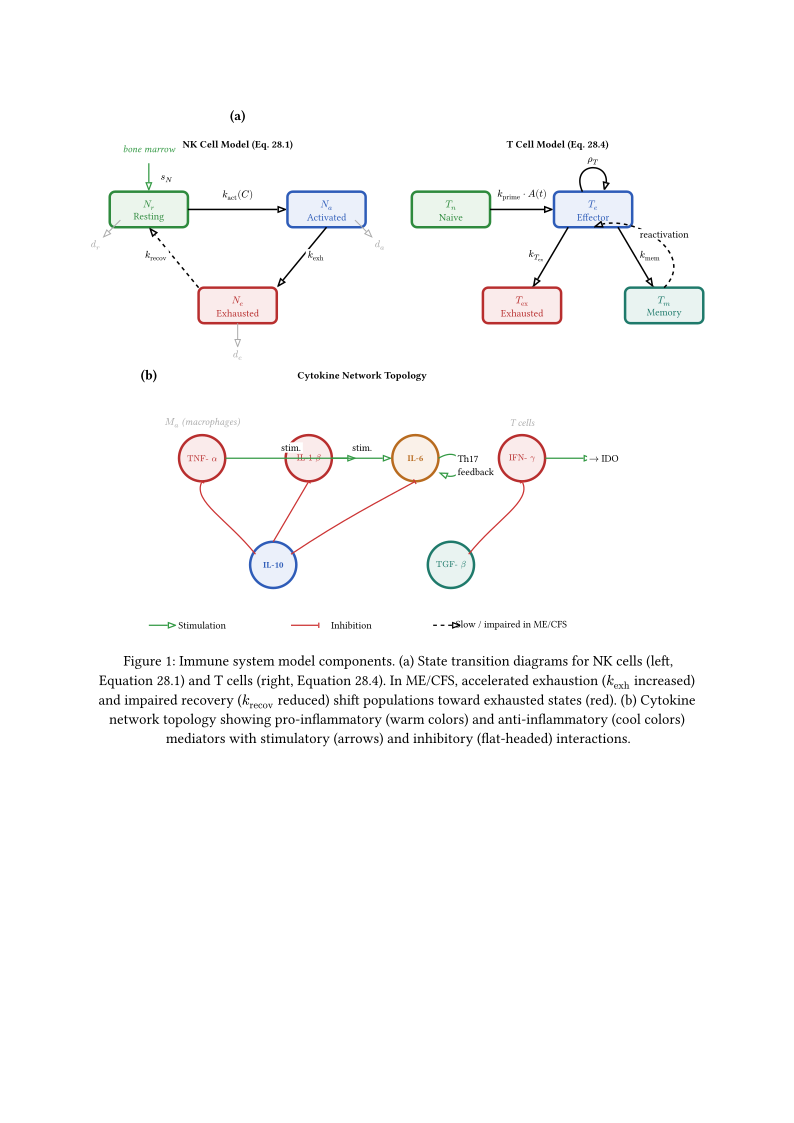 Immune dysfunction is among the most consistently documented features of ME/CFS, encompassing reduced NK cell cytotoxicity, altered cytokine profiles, T cell exhaustion, and autoimmune phenomena (Immune System Dysfunction). This chapter develops mathematical models of these immune subsystems, progressing from innate immunity through adaptive responses to neuroinflammation and viral reactivation. The models use the ODE and stochastic frameworks established in Foundations of ME/CFS Modeling.
1 Contents
- Innate Immunity Dynamics
- Adaptive Immunity Models
- Neuroinflammation Models
- Viral Reactivation Models
- Response to Immune Interventions
- Mast Cell Activation Dynamics
- Coagulation and Microvascular Dynamics
- Model Application Guide
- Mast Cell-ECM Feedback Loop Extension
- Provisional GPCR Autoantibody Model Extensions (Azcue 2026)