Integrated Multi-System Models
ME/CFS is a multi-system disease, and its models must integrate across systems. This chapter couples the energy, immune, neuroendocrine, cardiovascular, gut-brain, and connective-tissue subsystems into whole-body models. It examines the couplings between domains, the mechanisms by which symptoms are generated, bifurcation analysis and disease subtypes, and the attractor dynamics that may underpin chronicity and relapse. The chapter also covers brain-clearance extensions and neuroplasticity attractor dynamics. A model application guide explains how the integrated system is used, providing the foundation for the temporal and predictive models of the following chapters.
For patients: little direct use; the whole-body coupling is technical, but the Energy–Immune Coupling section explains why separate symptoms travel together.
For caregivers: little direct use; the integrated framework does not translate into care tasks.
For clinicians: read the Symptom Generation Mechanisms, Bifurcation Analysis and Disease Subtypes, and Model Application Guide sections to see how multi-system disease produces subtypes.
For researchers: read the full derivation from the Energy–Immune Coupling and Whole-Body Systems Model sections through the Neuroplasticity Attractor Dynamics and Brain Clearance Architecture sections.
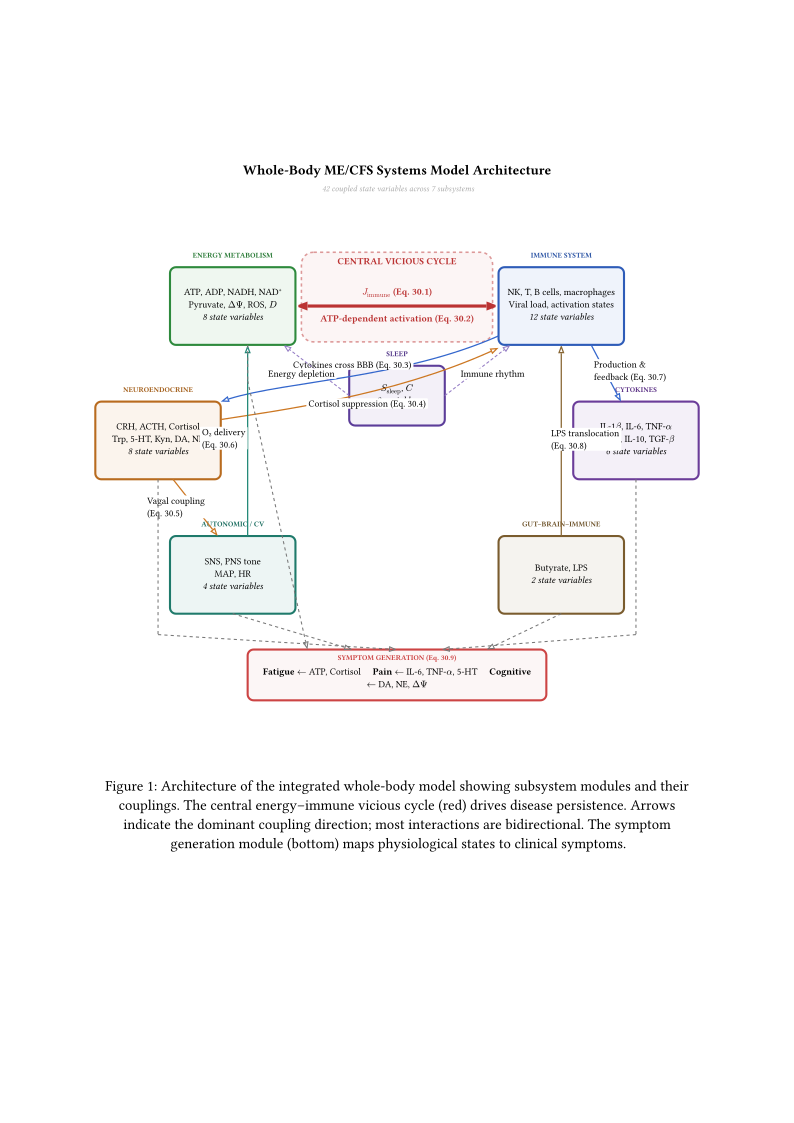 The preceding chapters developed models of individual physiological subsystems in isolation. ME/CFS, however, is a multi-system disease: energy metabolism, immune function, neuroendocrine regulation, and autonomic control are coupled through shared substrates, signaling molecules, and feedback loops (Integrative Models and Multi-System Pathophysiology). This chapter formalizes the inter-system couplings and constructs an integrated model that captures emergent properties not present in any subsystem alone (integrated systems architecture).
1 Contents
- Energy–Immune Coupling
- Neuroimmune Interactions
- Cardiovascular–Metabolic Integration
- Gut–Brain–Immune Axis
- Whole-Body Systems Model
- Symptom Generation Mechanisms
- Extended Subsystem Couplings
- Bifurcation Analysis and Disease Subtypes
- Model Application Guide
- Neuroplasticity Attractor Dynamics
- Connective Tissue Subsystem Extensions