Predictive Applications and Clinical Translation
The value of the formal models lies in what they predict. This chapter translates the quantitative framework into practical applications: personalized pacing optimization, treatment selection and optimization, prognosis prediction, and clinical decision support. It extends the models to drug-development applications, optimal control theory for pacing, global sensitivity analysis for ranking drug targets, and network controllability to identify minimum intervention sets. The chapter reports model-predicted treatment candidates and novel predictions that emerge only from the formal models, and ends with an implementation roadmap for bringing model-based guidance toward clinical use.
For patients: read the Personalized Pacing Optimization and Prognosis Prediction sections to see how models translate into personalised pacing and expectations.
For caregivers: read the Prognosis Prediction section to understand likely long-term course and what it means for support planning.
For clinicians: read the Personalized Pacing Optimization, Treatment Selection and Optimization, Prognosis Prediction, and Clinical Decision Support sections for direct clinical application.
For researchers: read the full derivation from the Drug Development Applications and Optimal Control Theory for Pacing sections through the Global Sensitivity Analysis and Drug Target Ranking, Network Controllability and Minimum Intervention Sets, and Novel Predictions: Results That Emerge Only from the Formal Model sections.
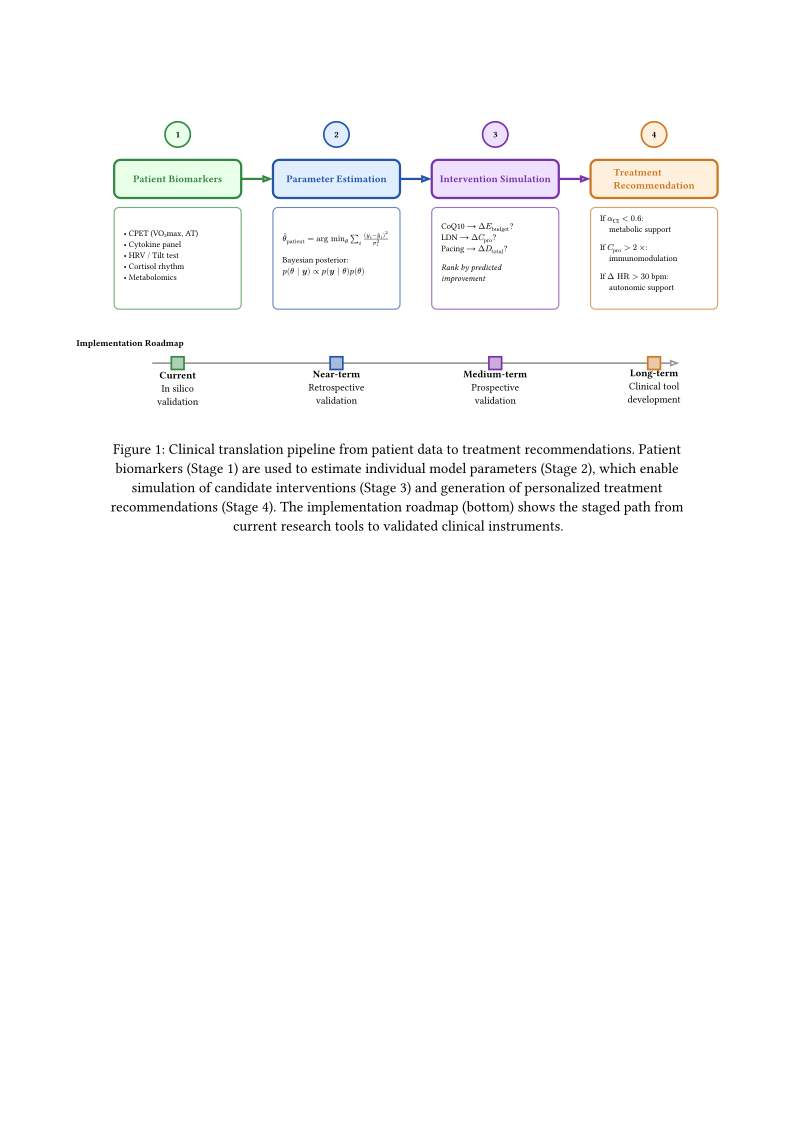 The mathematical models developed in this part are not ends in themselves but tools for improving clinical care. This chapter examines how the models can be translated into practical applications: personalized pacing optimization, treatment selection, prognosis prediction, clinical decision support, and drug development. Each application is assessed for its current feasibility given available data and technology, with explicit identification of remaining barriers to clinical implementation.
1 Contents
- Personalized Pacing Optimization
- Treatment Selection and Optimization
- Prognosis Prediction
- Clinical Decision Support
- Drug Development Applications
- Optimal Control Theory for Pacing
- Global Sensitivity Analysis and Drug Target Ranking
- Network Controllability and Minimum Intervention Sets
- Model-Predicted Treatment Candidates
- Virtual Population Simulation
- Novel Predictions: Results That Emerge Only from the Formal Model
- Implementation Roadmap